She had been in custody for nearly four months until she was released on bail on 29 May after a successful appeal to the Mpumalanga High Court.
The time that she spent as an awaiting-trial detainee had a profound impact on Sonell. She was held in horrific conditions, and fear and uncertainty almost destroyed her.
“I have never felt so alone in my life. I felt as if everybody had forgotten about me. Stripped of my life, my reputation, my freedom and potentially my future, I nearly lost my mind.”
She spent the first few weeks of her incarceration in the holding cells of the Kamhlushwa police station, where she initially only had the clothing that she had been wearing when she was arrested.
“I had no toilet paper, toiletries or sanitary products and the water in the shower was ice cold. I was also not allowed to contact my family.
“I have never felt so alone in my life. I felt as if everybody had forgotten about me. Stripped of my life, my reputation, my freedom and potentially my future, I nearly lost my mind.”
During her time at the Kamhlushwa police station she also became aware of the fact that she was not the only victim of the police at the station. One night she was joined in her cell by a woman who had been brutally assaulted during an interrogation.
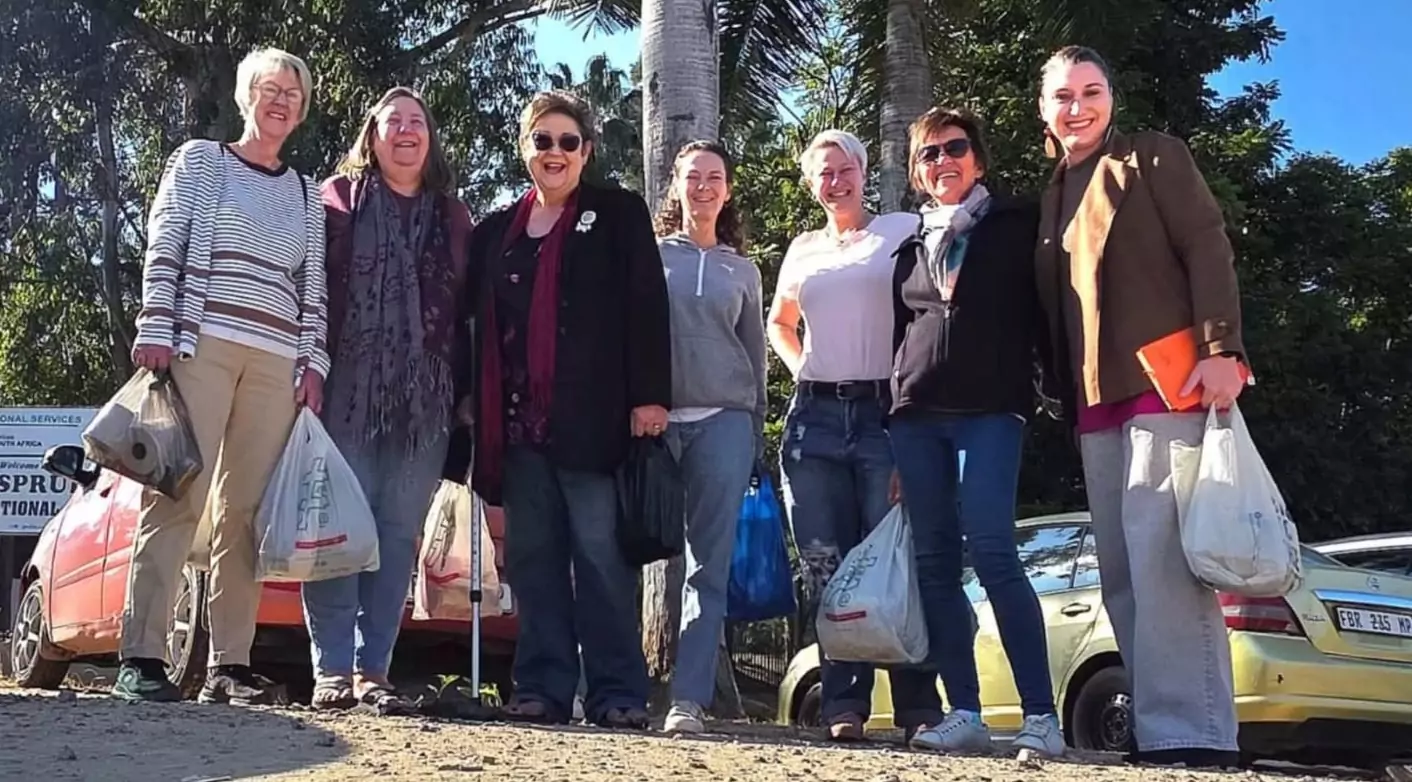
After a few court appearances during which her bail application had been denied, Sonell was transported to the Nelspruit prison, where she found herself in a cell with more than 30 other women awaiting trial.
“There were only 23 mattresses, and many women had to sleep on the cement floor. We had to share one bath, one shower and one toilet. Necessities such as toilet paper were a luxury and the food, consisting mostly of starch, was never enough. Prison wardens were often less than sympathetic and sometimes even abusive,” she says.
“The women who shared my cell have become my sisters. I have learnt so much from them.”
While the prison did supply some basic toiletries such as soap, it was not enough to last the month.
The difficult circumstances of women uncertain about the future, worried about their families and stripped of their dignity by an uncaring system, resulted in close friendships and deep support for one another.
“We were there for one another – without any judgement. We knew everything about each other. If you are locked up for most of the day with nothing to do, you talk a lot. You share every heart-breaking detail of your life, and you feel safe, because you are all in the same boat.”

Because Sonell had a support network of family and friends, she quickly arranged for her visitors to supply the women in her cell with necessities.
Tarina Coetzee, who visited Sonell regularly, says bringing the most basic supplies into prison is quite a challenge.
“Sonell’s visitors had to learn quickly to deal with the endless rules that applied to visitors and what can and cannot be brought in for detainees.
“I am still doing prison visits, and the processes are almost impossible to navigate. There is no consistency and after more than five months of visiting I am still not sure what would be turned away at the gate,” she says.
During Tarina’s visits with Sonell the idea of an organisation to help trial-awaiting women was born. It was discussed in depth and on the day that Sonell was released on bail, all the preparations had been done and a not-for-profit organisation, The Unchained Network NPC was established. Volunteers were recruited and the work started in all earnest.
“I am completely overwhelmed and humbled by what is happening with something that started so small.”
“When I sit back and look at what we have achieved in such a short time, I can barely believe it. There are so many people who are willing to help. I just had to ask. Helen Slabbert, an accountant, has taken responsibility for the statutory requirements of our organisation. She just made it happen. And I have never even met her personally. She just wanted to help.
“Tersia Marshall, an attorney, just showed up and started helping women with legal matters. She was just there one day.
“We have about 20 women who volunteer to visit the detainees with food and other necessities. This includes a social worker, journalists and members of the clergy.
“I am completely overwhelmed and humbled by what is happening with something that started so small,” she says.
Sonell has big dreams for The Unchained Network. She wants to expand the organisation to include other prisons, and she wants to approach Correctional Services and form a partnership with them to improve the prison conditions for awaiting-trial women.
“The women who shared my cell have become my sisters. I have learnt so much from them. I have been fortunate enough to be released on bail. Many of them are not that fortunate. I am going to do everything in my power to help them. I see it as a sacred calling,” she says.
* Tarina Coetzee is the editor of myLOWVELD.net.